Mountain Skills 1 Course Information
Mountains Skills 1 is the first course in the Mountain Skills Scheme administered by Mountaineering Ireland.
Course Location Information Pages
What will I learn on a Mountain Skills 1 course?
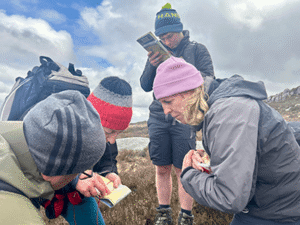
Mountain Skills One covers the fundamentals of map reading, using a compass and issues such as access and safety in the Irish uplands. I break down the course into easy to understand steps. We then build on those throughout the two day course. While we concentrate on learning we also concentrate on having a great time with lots of laughs. We go hiking to enjoy ourselves not to spend all our time with our noses stuck in a map.
What are the benefits of a Mountain Skills course?
The benefits of the Mountain Skills 1 course is that your confidence in your own ability grows. You plan your days more carefully and are more prepared so you become more adventurous in your route choice and destinations. Your ability to understand a map and use it to successfully contributes to a generally more enjoyable experience in the Irish Mountains.
Here are some helpful hiking resources you can review after the MS1 course
MS1 Day One
- We learn to observe where we are
- Describing where we are is the first step to mountain skills
- We go for an easy hike along paths and trails
- Pacing and distance estimation is key, it’s easy with practise. We have two days
- Noticing what has changed and wondering what that might look like on the map is the next step
- How is the path represented? What shape does it make?
- How far have we walked? (not very far)
- We estimate distance and then measure from the map…guess what our estimate was good!!😁
- Next we talk about uphill and downhill
- How do we know from the map what is up and what is down?
- “Contours are King”, we chat about the ground and the shapes it makes
- Then we plan the rest of the day breaking it down into manageable parts. And off we go!!🥷
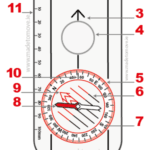
- By lunch time we are chatting about the compass and where North is.
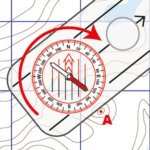
- We incorporate taking a bearing into the next part of the day
- There is lots of chat about features, lines and what they mean.
- I might even take the emergency shelter out. You mean you have never sat in a big orange bag with a group of strangers on the side of a mountain? It’s not to be missed.
MS1 Day Two
- Day two begins with a quick review of what we covered previously
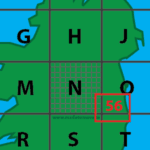
- We introduce some new concepts such as grid references
- Different maps are compared. Which are the best?
- Each map has it’s own advantage, we learn to distinguish the differences
- We compare scales, colours and all the different symbols
- Everyone enjoys the history of mapping and how maps are made
- We look at the same routes on different maps
- Whats the most important information to make our hike successful
- We begin to plan our day. We test our mountain skills
- We use the skills from the previous day to make decisions and discuss what techniques we might use to find particular features.
- We estimate time, what time do we need to be back at the cars?
- So how far can we go/
- We put our plan into action on a short hike.
- We make sure to get lots of practise
- Each navigation task is resolved by a simple navigation process that builds your confidence
- We have lots of time to look at contours, estimate heights and distances and discuss navigation techniques.
Mountain Skills One
Official Mountaineering Ireland Course
Where are MS1 Courses held?
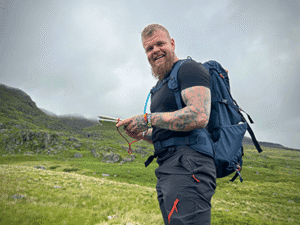
Some people run hot! 🔥
Bring clothes you are comfortable in
What should you bring on the MS1 course?
Map & Compass
Clothes & Equipment
You will find an equipment list on my Equipment List Page
The essentials will include boots, waterproof jacket and leggings, warm layers and a ruck sack with food and water. You won’t need any special equipment other than what you might usually use on a hike. If you use walking poles bring walking poles but we will not be walking on very difficult ground
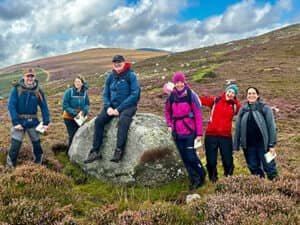
Lots of rocks to sit on!!
Lots of chats, lots of breaks!
How fit do I have to be for Mountain Skills?
You don’t have to very fit at all. Having average fitness is fine. What’s average fitness? Can you walk for a few hundred meters without having to stop to catch your breath? If so you can attend the course. We don’t go very fast or very far. If we are walking uphill we take plenty of rests and we learn to adjust our pace to suit everyone in the group. We pause to chat and navigate very often so there is plenty of time to catch your breath, put a jacket on or take a jacket off, grab some food and have a drink. I aim for everyone to have a great time.